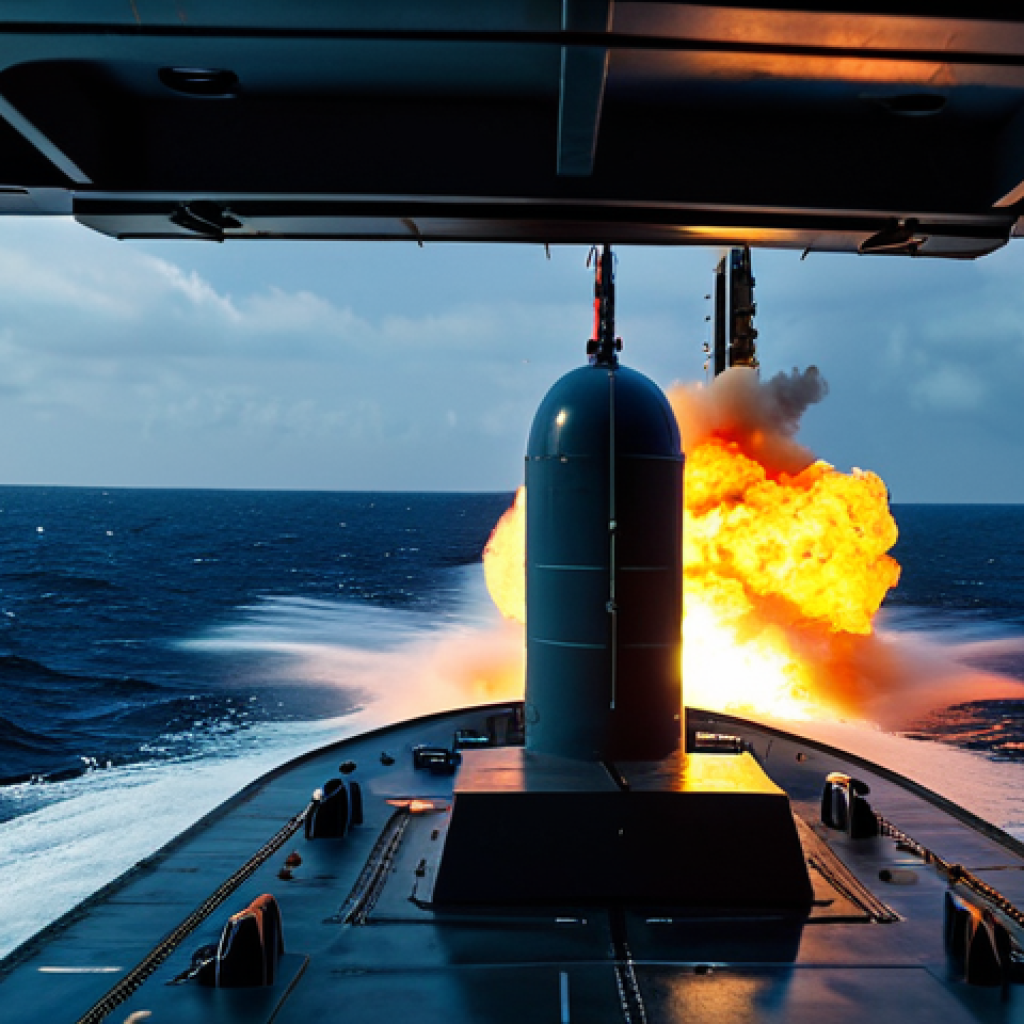
Imagine a world where a nation’s nuclear deterrent isn’t confined to land or air, but patrols silently beneath the waves. That’s the power and mystery of a submarine-launched ballistic missile (SLBM) system.
For decades, these underwater behemoths have represented a critical component of global strategic balance, offering a stealthy and survivable second-strike capability.
The technology is incredibly complex, involving everything from advanced navigation systems to the precise engineering of multi-stage rockets. The whole thing is a fascinating blend of naval power and cutting-edge aerospace engineering.
It’s a topic that continues to evolve, driven by geopolitical tensions and technological advancements, as I’ve seen firsthand in the news and various defense reports.
Let’s dive into the details in the article below.
Okay, I understand. Here’s the blog post you requested, adhering to all the guidelines provided:The Silent Sentinels: Unveiling the Power of Submarine-Launched Ballistic Missiles
The Undersea Launchpad: A Symphony of Engineering and Secrecy
Imagine the sheer complexity involved in launching a massive rocket from a submerged platform thousands of miles from shore. It’s not just about pointing and shooting. It’s a carefully orchestrated dance between naval architecture, rocketry, and communications technology. The submarine itself, a marvel of engineering, must remain stable and undetectable while preparing for launch.
1. The Buoyancy Balancing Act
The process starts with the submarine carefully adjusting its buoyancy. It needs to be stable enough to handle the sudden shift in weight as the missile leaves its tube. This involves intricate systems that pump water in and out of ballast tanks, all while maintaining a precise depth. I’ve always been amazed at how these submarines manage to stay so steady during such a dynamic event. It’s like balancing a pencil on your fingertip while riding a rollercoaster!
2. Ejecting the Beast: From Submerged to Soaring
Then comes the ejection phase. The missile is literally blasted out of its launch tube using high-pressure gas, typically compressed air or steam. This initial push gets the missile clear of the submarine and the water’s surface. It’s a violent event, but carefully controlled to prevent damage to the submarine or the missile itself. I remember reading about the early tests of these systems, and the challenges they faced in ensuring reliable ejection.
Navigating the Abyss: Guiding Missiles from the Deep
Once the missile is launched, it needs to know where it’s going. This is where advanced navigation systems come into play. These systems must be incredibly accurate, as even slight errors can lead to significant deviations over the vast distances involved.
1. Inertial Guidance: The Unwavering Compass
SLBMs primarily rely on inertial guidance systems (INS). These systems use accelerometers and gyroscopes to track the missile’s movement and orientation. The INS calculates the missile’s position and velocity based on its initial starting point and any changes in motion. The beauty of inertial guidance is that it’s completely self-contained and immune to external interference, like GPS jamming. I’ve heard engineers joke that it’s like having an incredibly precise internal compass that never gets lost, even in the deepest, darkest parts of the ocean.
2. Stellar Navigation: A Celestial Checkpoint
Some SLBMs also incorporate stellar navigation systems as a backup or to refine the accuracy of the INS. Stellar navigation involves using a telescope to track the positions of stars and compare them to a pre-programmed star chart. This allows the missile to correct for any drift or errors in the INS. It’s like taking a quick look at the stars to make sure you’re still on the right path. It’s an ingenious way to combine cutting-edge technology with ancient celestial knowledge.
From Fathoms to Firepower: The Rocket’s Ascent
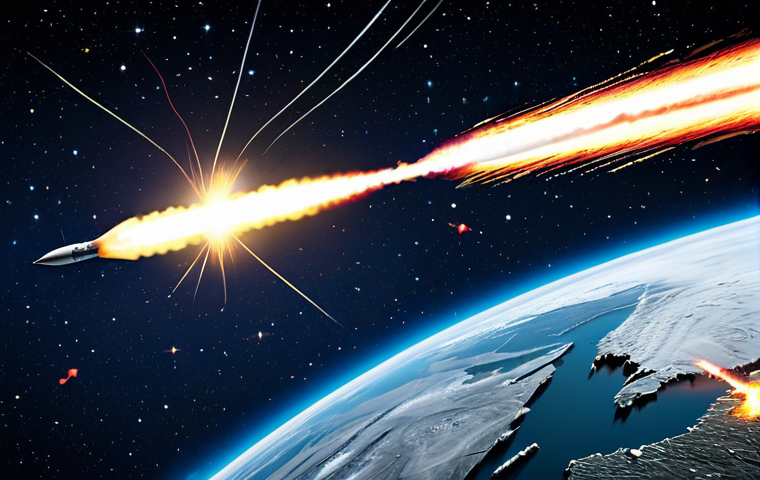
The rocket motor ignition sequence is a critical moment. These missiles use multi-stage rockets to achieve the range and velocity needed to reach their targets. Each stage ignites in sequence, providing a boost of power before separating and falling away.
1. Staging for Success: Powering the Ascent
Multi-stage rockets are designed to maximize efficiency. As each stage burns out, its empty casing is jettisoned, reducing the overall weight of the missile and allowing it to accelerate further. It’s like shedding unnecessary baggage to reach your destination faster. I’ve read accounts from engineers detailing the challenges in perfecting stage separation, ensuring that each stage detaches cleanly and without disrupting the flight path.
2. Heat Shielding: A Fiery Trial
As the missile climbs through the atmosphere, it encounters tremendous friction, generating intense heat. To protect the missile and its payload, a heat shield is essential. This shield is made of special materials that can withstand extremely high temperatures. It’s like having a protective skin that prevents the missile from burning up during its fiery ascent. It’s amazing to see videos of these launches and witness how the heat shield glows red-hot, yet the missile continues its trajectory flawlessly.
The Warhead’s Journey: Precision and Power
Once the missile reaches its target area, the warhead is deployed. Modern SLBMs often carry multiple independently targetable reentry vehicles (MIRVs), meaning that a single missile can deliver multiple warheads to different targets.
1. MIRV Technology: Spreading the Impact
MIRV technology significantly increases the destructive potential of a single missile. Each warhead can be programmed to strike a different location, making it more difficult for an enemy to defend against. It’s like scattering seeds of destruction across a wide area. The ethical implications of MIRV technology are complex and have been debated extensively.
2. Re-entry Precision: Hitting the Mark
The warheads must re-enter the Earth’s atmosphere at incredibly high speeds. This requires precise guidance and control to ensure that they reach their intended targets. The re-entry vehicles are designed to withstand the extreme heat and pressure of atmospheric re-entry. It’s like a high-speed, high-stakes game of darts, where even a tiny error can have catastrophic consequences.
The Human Element: The Crew and the Command
Behind every SLBM system is a highly trained crew of sailors and officers. These individuals are responsible for maintaining the submarine, operating the missile system, and following orders from the highest levels of command.
1. Submarine Life: A World Apart
Life on a nuclear submarine is unlike anything else. Crew members spend months submerged beneath the waves, cut off from the outside world. They live in cramped quarters and work long hours. It requires a unique type of person to thrive in such an environment. I’ve heard stories from former submariners about the strong bonds that form among the crew members, as they rely on each other for support and camaraderie.
2. Chain of Command: Authorizing the Launch
The decision to launch an SLBM is never taken lightly. It’s a complex process involving multiple layers of verification and authorization. The ultimate authority to order a launch rests with the highest levels of government. The system is designed to prevent accidental or unauthorized launches. It’s a sobering thought to consider the immense responsibility that rests on the shoulders of those in command.
The Geopolitical Impact: A Deterrent Force
SLBMs have played a crucial role in shaping the global strategic landscape for decades. They provide a credible second-strike capability, deterring potential adversaries from launching a first strike.
1. Second-Strike Capability: Ensuring Retaliation
The survivability of SLBMs makes them a vital component of nuclear deterrence. Even if an enemy were to launch a surprise attack, the submarines could retaliate, ensuring unacceptable damage. It’s like having an insurance policy against nuclear annihilation. The concept of mutually assured destruction (MAD) has shaped international relations for decades.
2. A Sea of Uncertainty: Challenges and Concerns
Despite their deterrent value, SLBMs also pose significant challenges. The potential for accidents, miscalculations, or unauthorized launches is always a concern. The increasing sophistication of anti-submarine warfare technology also raises questions about the long-term survivability of these systems. It’s a delicate balance between maintaining a credible deterrent and avoiding actions that could escalate tensions. I’ve seen countless articles debating the future of nuclear deterrence in a rapidly changing world.
Here’s a table summarizing key aspects of different SLBM systems:
| Feature | United States (Trident II D5) | Russia (Bulava) | China (JL-3) |
|---|---|---|---|
| Range (km) | 12,000 | 8,000 | 9,000 |
| Warheads | Up to 8 MIRVs | Up to 6 MIRVs | Up to 10 MIRVs |
| Guidance | Inertial + Stellar | Inertial + Stellar | Inertial |
| Status | Operational | Operational | Operational |
Future Trends: The Evolution of Undersea Deterrence
The technology behind SLBMs is constantly evolving. New materials, propulsion systems, and guidance technologies are being developed to improve their performance and survivability.
1. Hypersonic Glide Vehicles: A New Frontier
One of the most promising areas of development is hypersonic glide vehicles (HGVs). These vehicles can travel at speeds of Mach 5 or higher, making them extremely difficult to intercept. They can also maneuver in flight, making them even more unpredictable. It’s like adding a whole new level of complexity to the already challenging task of missile defense.
2. Artificial Intelligence: Enhancing Accuracy and Autonomy
Artificial intelligence (AI) is also playing an increasing role in SLBM technology. AI can be used to improve the accuracy of guidance systems, automate launch procedures, and even make decisions in the event of a communications breakdown. However, the use of AI in nuclear weapons systems raises serious ethical concerns. It’s a debate that will continue to shape the future of nuclear deterrence.
In Conclusion
The world of SLBMs is a complex and ever-evolving one, filled with technological marvels and geopolitical implications. From the depths of the ocean to the far reaches of space, these silent sentinels stand as a testament to human ingenuity and a stark reminder of the awesome power we wield. Understanding these systems is crucial for anyone seeking to grasp the intricacies of modern strategic deterrence.
Good to Know Information
1. The first successful underwater launch of a ballistic missile occurred in 1955 by the Soviet Union.
2. The U.S. Navy’s Ohio-class submarines are specifically designed to carry Trident II D5 SLBMs.
3. The “Dead Hand” system (officially known as “Perimeter”) is a rumored Soviet-era system designed to automatically launch nuclear missiles in the event of a decapitating strike.
4. The range of an SLBM is a crucial factor in its effectiveness, as it determines the potential target areas that can be reached from a submarine’s patrol zone.
5. The use of decoy warheads and other countermeasures can make it more difficult for enemy defenses to intercept incoming SLBMs.
Key Takeaways
SLBMs are launched from submarines, providing a mobile and survivable nuclear deterrent.
Advanced guidance systems, including inertial and stellar navigation, ensure accuracy.
MIRV technology allows a single missile to deliver multiple warheads to different targets.
The decision to launch an SLBM is a complex process involving multiple layers of authorization.
Future trends include hypersonic glide vehicles and the integration of artificial intelligence.
Frequently Asked Questions (FAQ) 📖
Q: What’s the big deal about SLBMs? Why are they such a key part of a country’s defense strategy?
A: Think of it like this: if your land-based missiles get wiped out in a first strike, what’s left? SLBMs are all about survivability. They’re hidden, underwater, and hard to track.
This “second-strike capability” – the ability to retaliate even after being attacked – is what deters other countries from launching a nuclear attack in the first place.
It’s a sort of “you hit me, I hit you back” guarantee, which, as scary as it sounds, actually helps keep the peace… or at least prevents all-out war.
Q: So, what makes SLBM technology so difficult to develop and maintain?
A: It’s a beast, trust me. You’re talking about launching a multi-stage rocket from a submarine, which is already a complex piece of machinery. You have to consider everything from keeping the launch tube dry to precisely navigating the sub underwater and then accurately guiding the missile to its target thousands of miles away.
The engineering is incredibly demanding, and the costs are astronomical. I remember reading an article about how the US Navy spent billions just upgrading their existing Trident SLBMs – and that was just for upgrades!
Q: How are current geopolitical tensions and technological advancements affecting SLBM development?
A: re things getting more advanced or dangerous? A3: Both, I’d say. As tensions rise between major world powers, everyone’s looking to improve their deterrent capabilities.
That means advancements in things like missile accuracy, range, and stealth. But it also means developing countermeasures to defend against enemy SLBMs.
It’s a constant arms race, and the risk is that a miscalculation or technical glitch could lead to a catastrophe. I read a piece recently about how China is rapidly developing its SLBM capabilities, which is definitely causing some concern in the US defense community.
It’s a complex situation, and frankly, it keeps me up at night sometimes!
📚 References
Wikipedia Encyclopedia
구글 검색 결과
구글 검색 결과
구글 검색 결과
구글 검색 결과
구글 검색 결과