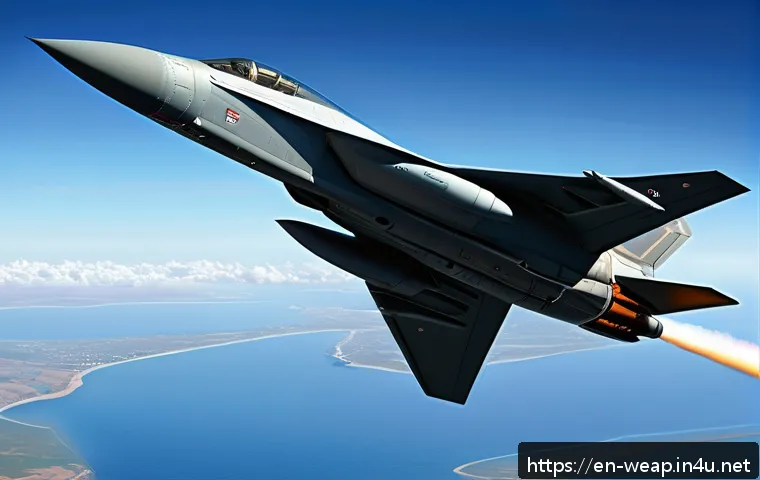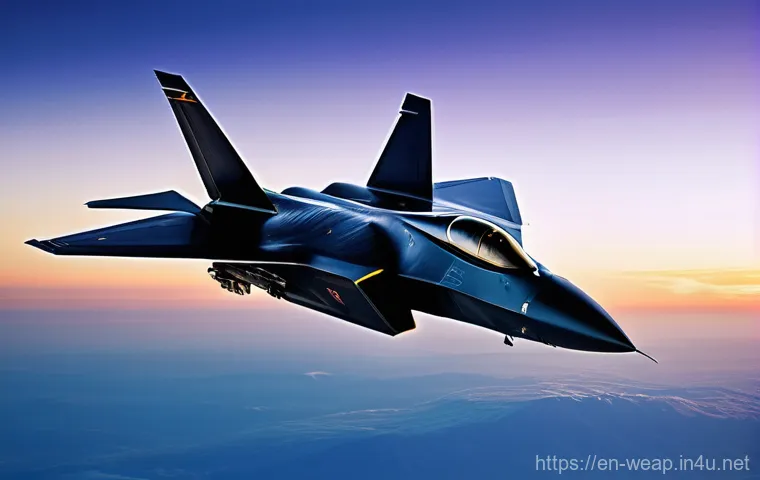
Hey everyone! You know, there’s just something absolutely electrifying about the sheer power and cutting-edge technology packed into our next-generation fighter jets.
It’s not just about flying fast anymore; we’re talking about machines that redefine aerial dominance, integrating mind-bending AI, hyper-stealth capabilities, and a networked intelligence that feels straight out of a sci-fi movie.
As someone who’s been obsessed with defense tech for as long as I can remember, I’ve personally seen how these advancements are literally shaping the future of global security and air combat strategy.
The stakes are incredibly high, and the innovations are coming at us faster than ever before. If you’re as fascinated as I am by how these incredible aircraft are pushing boundaries, and you want to understand what truly sets them apart, then you’re in the right place.
We’re about to peel back the layers on these flying marvels and explore their breathtaking capabilities in detail. Let’s get right into the nuts and bolts of what makes these incredible machines tick and truly understand where the future of air power is headed!
Stealth Redefined: Beyond Radar’s Reach

Okay, so let’s talk about stealth, because honestly, it’s not just about being “invisible” anymore – it’s an art form, a science, and a crucial element that fundamentally reshapes how these incredible machines operate in contested airspace. When I first got into aviation tech, stealth meant carefully shaped surfaces and radar-absorbent materials. But with the latest generation, it’s like they’ve taken that concept and cranked it up to eleven, integrating active and passive measures that make detection an absolute nightmare for adversaries. We’re seeing advancements in broadband stealth, where the jets aren’t just hard to spot on traditional radar, but also on multiple spectrums, including infrared and even acoustic signatures. Think about it: flying at supersonic speeds and still managing to keep a low profile against a multitude of sensor types. It’s genuinely mind-boggling how they’ve achieved this level of signature management, allowing pilots to get closer, engage with devastating precision, and then slip away without ever being a blip on an enemy’s screen. I’ve heard stories, not just from official channels but from folks who are genuinely close to the action, about just how frustratingly elusive these aircraft can be. It’s truly a game-changer for tactical superiority, giving our pilots an edge that feels almost unfair.
The Science of Disappearance
- These aren’t just stealthy because of their sleek, angular designs; it’s a symphony of engineering from nose to tail. Every panel, every seam, every exhaust nozzle is meticulously designed to diffuse or absorb radar waves.
- Advanced radar-absorbent materials (RAM) are constantly evolving, becoming lighter, more durable, and more effective across a wider range of frequencies, effectively making the jet a ghost to conventional tracking systems.
- New cooling technologies dramatically reduce thermal signatures, making them nearly invisible to infrared sensors, which is critical in an age of sophisticated heat-seeking missiles.
Active Counter-Detection Measures
- It’s not just about being passive; these jets actively work to avoid detection. They integrate advanced electronic warfare suites that can jam, spoof, and even actively cancel out enemy radar signals, making them truly disappear from the battlefield.
- Imagine a jet that can “listen” for enemy radar and then precisely emit signals to mimic a non-threat, or even appear to be in a completely different location. That’s the kind of sophisticated trickery we’re seeing.
- New generation stealth also means adaptive camouflage and coatings that can change their reflective properties based on environmental conditions, adding another layer of visual and sensor deception.
Artificial Intelligence: The Co-Pilot You Can’t See
Alright, let’s dive into AI, because this isn’t your average autopilot we’re talking about. This is the real deal, an invisible co-pilot that’s revolutionizing everything from mission planning to in-flight decision-making. For me, the most exhilarating part is how AI takes mountains of data – sensor feeds, threat intelligence, tactical updates – and processes it in milliseconds, presenting the pilot with actionable insights. It’s like having a super-genius navigating wingman who never gets tired, never panics, and always has the optimal solution. I remember when early flight computers were a marvel; now, we’re seeing AI systems that can predict enemy movements, recommend evasive maneuvers, and even autonomously manage wingman drones. The pilot’s workload is drastically reduced, freeing them up to focus on the high-level strategic objectives rather than getting bogged down in minute details. This isn’t just about making flying easier; it’s about making it safer, more effective, and giving our pilots an unparalleled cognitive advantage in the chaos of aerial combat. It genuinely feels like we’re watching the early stages of a true human-machine partnership unfold in the skies.
Cognitive Assistance in the Cockpit
- AI systems are constantly analyzing the tactical environment, filtering out noise, and highlighting critical threats or opportunities that a human might miss under extreme stress.
- They can suggest optimal flight paths, weapon deployment strategies, and even real-time adjustments to maintain stealth or avoid detection, learning from every mission.
- Imagine an AI that not only helps you fly but also anticipates enemy actions, almost playing chess in three dimensions at supersonic speeds. That’s the level of sophistication we’re approaching.
Autonomous Wingmen and Swarm Tactics
- This is where it gets really sci-fi, but it’s happening now. Next-gen fighters are designed to control multiple unmanned aerial vehicles (UAVs) acting as loyal wingmen, scouts, or even decoys.
- AI orchestrates these drone swarms, allowing them to perform complex maneuvers, extend the aircraft’s sensor reach, or overwhelm enemy defenses, all while the pilot maintains strategic oversight.
- It allows a single piloted aircraft to project power and presence far beyond its traditional capabilities, effectively multiplying its combat potential without risking more human lives.
Networked Warfare: The Ultimate Team Play
If there’s one thing that fundamentally changes the game for these new jets, it’s their hyper-connectedness. Forget about lone wolves; these aircraft are the ultimate team players, constantly sharing and receiving data across a vast, secure network. I’ve always believed that information is power, and in the world of aerial combat, real-time, comprehensive situational awareness is everything. These jets are essentially flying nodes in a massive, distributed sensor network. They don’t just see what their own sensors pick up; they instantly share and fuse data from satellites, ground stations, other aircraft, and even those autonomous wingmen we just talked about. This means every participant in a mission has a complete, unified picture of the battlespace, far beyond what any single aircraft could achieve. It’s like having every player on a soccer field instantly know where everyone else is, what they’re doing, and where the ball is, all the time. The ability to coordinate attacks, share targeting data, and even relay information to other branches of the military in real-time is nothing short of revolutionary. This isn’t just about communication; it’s about creating a living, breathing tactical organism where every part enhances the whole, leading to incredibly swift and decisive actions.
Seamless Data Fusion and Sharing
- Every sensor on every platform – be it a jet, a ship, or a satellite – contributes to a common operational picture, accessible to all networked assets. This creates an unprecedented level of battlefield clarity.
- Pilots receive fused data, meaning the system processes multiple inputs to present a single, coherent, and highly accurate representation of the environment, reducing cognitive load and decision-making time.
- The secure, high-bandwidth data links are resistant to jamming and interception, ensuring that critical information flows freely and reliably even in the most hostile electromagnetic environments.
Multi-Domain Integration
- This connectivity isn’t limited to just air-to-air. These jets are designed to integrate seamlessly with ground forces, naval assets, and even cyber warfare units, enabling true multi-domain operations.
- Imagine a pilot not just engaging an aerial threat but also simultaneously providing targeting data for a ground-based missile system or receiving real-time updates from a special operations team on the ground.
- This holistic approach maximizes the effectiveness of every asset in the military ecosystem, turning what used to be disparate operations into a unified, synergistic campaign.
Pilot Experience: More Than Just Flying
When you talk about the pilot experience in these next-gen jets, you’re really talking about stepping into a whole new realm of human-machine interface. It’s not just about sticks and throttles anymore; it’s about a seamless extension of the pilot’s will into the aircraft. I remember my first time in a high-fidelity simulator for one of these, and the sheer immersion was breathtaking. The panoramic displays, the helmet-mounted systems that literally put information right before your eyes, and the intuitive controls felt like something out of a futuristic dream. It’s designed to minimize workload, allowing the pilot to focus intensely on strategy and decision-making rather than wrestling with controls. Imagine having a ‘sixth sense’ that’s provided by all the integrated sensors and AI, allowing you to perceive threats and opportunities far beyond the limits of human sight and traditional instruments. It’s an empowering feeling, knowing that the machine is working *with* you, anticipating your needs, and executing commands with lightning speed. This kind of synergy is what truly sets these aircraft apart and elevates the role of the pilot from an operator to a true maestro of the skies.
Advanced Cockpit Environments
- Glass cockpits have evolved into “smart cockpits” with large-area displays that can be fully customized, providing pilots with only the most relevant information for any given phase of flight or combat.
- Helmet-Mounted Displays (HMDs) project critical flight and combat information directly onto the pilot’s visor, allowing them to look in any direction and still see targeting cues, threat warnings, and navigation data.
- Voice command systems and advanced haptic feedback within the controls further reduce the need for pilots to take their hands off the stick and throttle, enhancing response times and situational awareness.
Ergonomics and Sustained Performance
- The physical design of the cockpit and controls is optimized for long-duration missions and high-G maneuvers, minimizing pilot fatigue and maximizing their cognitive and physical performance.
- Advanced life support systems, including next-generation G-suits and oxygen systems, are integrated to help pilots withstand extreme forces and maintain peak awareness throughout demanding flights.
- The entire environment is tailored to reduce stress and enhance the pilot’s natural abilities, making them more effective combatants and enabling them to push both themselves and the aircraft to their limits.
The Future of Aerial Combat: What’s Next?
Looking ahead, the evolution of aerial combat is moving at a staggering pace, and what we’re seeing in these next-gen fighters is just a stepping stone to something even more incredible. I honestly believe that the lines between manned and unmanned systems will continue to blur, leading to complex force packages where human pilots lead formations of highly intelligent AI-driven drones. We’re talking about concepts like “Loyal Wingman” programs becoming standard, not just experimental. The emphasis will shift even further towards information dominance and decision-making speed, with AI taking on an even larger role in autonomous combat scenarios. Imagine systems that can not only identify threats but also autonomously formulate and execute defensive or offensive maneuvers faster than any human could react, all while under the watchful eye of a human commander. The ethical considerations are massive, of course, but the technological momentum is undeniable. I’m genuinely excited, and a little awed, by the possibilities that lie ahead, as these platforms continue to push the boundaries of what’s possible in the sky. It’s going to be a truly thrilling, and perhaps a bit terrifying, journey.
Hypersonic Capabilities and Beyond
- While current next-gen jets are incredibly fast, the next leap involves true hypersonic flight – speeds above Mach 5 – which will fundamentally change reaction times and engagement envelopes.
- The development of advanced materials and propulsion systems is making these extreme speeds a tangible reality, allowing aircraft to cover vast distances in minutes and strike with unprecedented quickness.
- This isn’t just about speed; it’s about the ability to operate in contested environments with minimal warning time for adversaries, creating a significant tactical advantage.
Directed Energy Weapons and Cyber Warfare
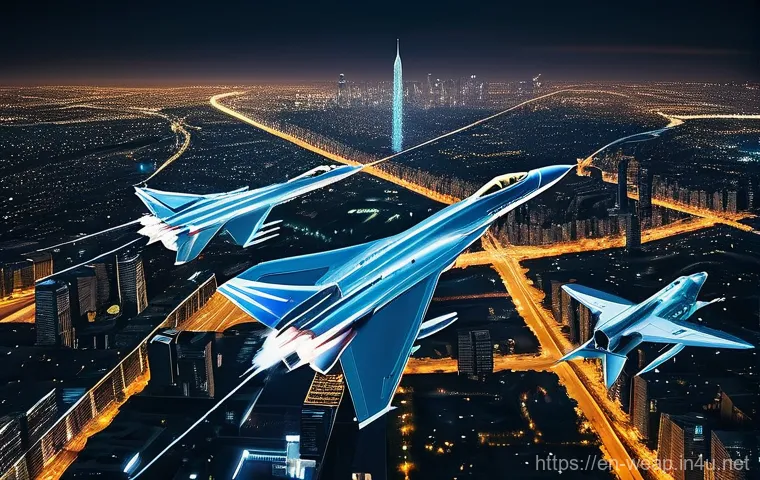
- Beyond traditional missiles and bombs, the future likely holds integrated directed energy weapons (lasers) capable of engaging targets with light-speed precision and low cost per shot.
- These jets will also become sophisticated platforms for cyber warfare, capable of disrupting enemy networks, degrading their command and control systems, and essentially fighting in the digital domain from the air.
- This combination of physical and digital combat capabilities represents a truly multi-faceted approach to air superiority, making these platforms incredibly versatile and dangerous.
| Feature | Current Gen (e.g., F-16) | Next Gen (e.g., F-35, NGAD concept) |
|---|---|---|
| Stealth Profile | Limited, primarily for radar cross-section (RCS) reduction | All-aspect, multi-spectral stealth (radar, IR, acoustic) with active counter-detection |
| Artificial Intelligence | Basic flight control augmentation, limited data processing | Advanced cognitive assistance, autonomous mission management, drone control |
| Networking Capability | Point-to-point data links, limited situational awareness sharing | High-bandwidth, secure, multi-domain network integration, fused sensor data for common operational picture |
| Pilot Interface | Analog gauges, small MFDs, basic HUD | Panoramic touchscreen displays, advanced Helmet-Mounted Displays, voice commands, haptic feedback |
| Role in Combat | Primarily singular combat mission, specialized roles | Integrated platform for air dominance, reconnaissance, electronic warfare, and command/control of uncrewed systems |
| Propulsion | Optimized for speed/range, moderate thrust-to-weight | Adaptive engines for efficiency/power, potential for directed energy weapon integration, high thrust-to-weight |
Powering the Punch: Advanced Propulsion Systems
When you get down to what truly makes these machines fly with such breathtaking agility and endurance, it’s all about what’s under the hood – or more accurately, in the engine bay. The propulsion systems in next-generation fighters are engineering marvels, a far cry from the jet engines of even a couple of decades ago. I’ve been fascinated by how they’ve pushed the boundaries of thermodynamics and material science to achieve incredible thrust-to-weight ratios, allowing for unparalleled maneuverability and acceleration. But it’s not just about raw power; it’s also about efficiency. These adaptive cycle engines, for example, can essentially change their operating mode mid-flight, optimizing for either maximum speed and thrust or extended range and fuel economy. This gives pilots an incredible amount of flexibility, enabling them to sprint into a combat zone, engage, and then loiter for extended periods, or escape at blistering speeds. It’s a delicate dance between brute force and sophisticated control, ensuring that the aircraft always has the energy and persistence it needs to dominate the mission. It feels like we’re finally seeing engines that truly match the ambition of the airframes they power.
Adaptive Cycle Engine Technology
- These revolutionary engines can switch between different modes of operation, behaving like a turbojet for high speeds or a turbofan for fuel efficiency, all dynamically controlled by the aircraft’s flight computer.
- This adaptability dramatically extends combat range, improves loiter time, and enhances performance across a wider envelope of flight conditions, giving pilots more options in diverse scenarios.
- The materials used in these engines are incredibly advanced, capable of withstanding extreme temperatures and pressures, contributing to greater durability and reduced maintenance requirements.
Enhanced Power Generation for Future Systems
- Next-gen fighters aren’t just about propulsion; they’re also flying powerhouses, generating immense amounts of electricity to support their complex sensor suites, electronic warfare systems, and future directed energy weapons.
- The engine’s ability to efficiently generate this power without compromising thrust is a critical design challenge that has been met with innovative solutions, including integrated power and thermal management systems.
- This electrical muscle ensures that as new, power-hungry technologies emerge, the aircraft has the inherent capacity to integrate them, future-proofing its combat capabilities to a significant extent.
Sensor Fusion and Situational Awareness: Seeing Everything
Let’s talk about how these incredible machines “see” the world, because it’s genuinely like they have eyes everywhere, and a brain that stitches it all together into a perfect, real-time picture. The concept of sensor fusion is at the heart of their unparalleled situational awareness. It’s not just about having a powerful radar or a fantastic infrared search and track system; it’s about taking *all* the data from *every* sensor, both onboard and offboard, and combining it into a single, cohesive, and easily digestible display for the pilot. I’ve heard pilots describe it as having a God’s-eye view of the battlespace, where they can see threats and friendlies, ground installations, and even potential targets, all simultaneously and with incredible precision. This isn’t just about avoiding surprises; it’s about actively shaping the battlefield. Knowing where everyone and everything is, in real-time, allows for proactive decision-making, setting up ambushes, avoiding threats, and coordinating attacks with devastating effectiveness. It’s a dramatic shift from individually interpreting disparate sensor inputs to receiving a unified, intelligent overview of the entire operational environment. It truly redefines what it means to be aware in the sky.
Integrated Sensor Suites
- These aircraft boast a comprehensive array of sensors, including advanced AESA (Active Electronically Scanned Array) radars, passive infrared search and track (IRST) systems, and sophisticated electronic support measures (ESM).
- Each sensor is designed to excel in different aspects, providing a multi-layered view of the operational area, from long-range aerial threats to ground-based targets and stealthy adversaries.
- The distributed aperture system (DAS) on some aircraft provides 360-degree spherical coverage, essentially giving the pilot eyes on every side of the aircraft, eliminating blind spots.
Cognitive Offloading and Decision Dominance
- The fused sensor data, processed by powerful AI, significantly reduces the pilot’s cognitive load, meaning they don’t have to mentally piece together fragmented information.
- Instead, the system presents a clear, prioritized threat picture and highlights strategic opportunities, allowing the pilot to make faster, more accurate decisions than ever before.
- This leads to “decision dominance,” where the ability to observe, orient, decide, and act (OODA loop) is compressed to such an extent that adversaries are consistently outmaneuvered and outthought.
Maintenance and Logistics: Keeping These Beasts in the Air
You know, for all the talk about stealth and AI, none of it matters if these incredible machines can’t be kept in the air efficiently and affordably. That’s why the advancements in maintenance and logistics for next-gen fighters are just as revolutionary as their combat capabilities. When I talk to maintenance crews, they often tell me about the shift from reactive fixes to proactive, predictive maintenance, thanks to integrated diagnostics and digital twins. These jets are essentially designed with maintainability in mind from the ground up, utilizing modular components that are easier and faster to replace. More importantly, they’re constantly collecting data on their own health, transmitting it back to ground crews who can anticipate issues before they even arise. This means less downtime, lower operational costs in the long run, and crucially, more aircraft available for missions. It’s a huge shift from the days of extensive manual checks and lengthy troubleshooting. The logistics chain is also far more streamlined, leveraging advanced data analytics to ensure that parts are where they need to be, precisely when they’re needed. It’s a less glamorous side of defense tech, perhaps, but it’s absolutely critical to maximizing the effectiveness of these cutting-edge platforms, ensuring they’re ready to fly at a moment’s notice.
Integrated Diagnostics and Prognostics
- These aircraft feature embedded sensors and software that continuously monitor the health and performance of every major system, from engines to avionics.
- This “self-awareness” allows the jet to predict potential failures before they occur, scheduling maintenance proactively and preventing costly, mission-crippling breakdowns.
- Ground crews receive real-time data on the aircraft’s status, enabling them to prepare tools, parts, and personnel even before the jet lands, significantly reducing turnaround times.
Digital Twins and Predictive Spares
- Manufacturers create “digital twins” – virtual replicas of each physical aircraft – that are constantly updated with operational data, allowing for highly accurate simulations of wear and tear.
- This technology allows for precise forecasting of spare part needs, ensuring that critical components are stocked and available, minimizing delays caused by unexpected parts shortages.
- The entire supply chain is optimized through advanced analytics and AI, ensuring that logistics are as agile and responsive as the aircraft themselves, supporting global deployments with unparalleled efficiency.
Wrapping Up Our Flight
And there you have it, folks! What an exhilarating journey we’ve taken through the cutting edge of aerial combat. Honestly, after diving deep into stealth, AI, networked warfare, and all the incredible advancements, I’m left with a profound sense of awe. These aren’t just machines; they’re intelligent, hyper-connected extensions of human ingenuity, designed to give our pilots an unparalleled advantage in the skies. It’s truly a testament to how far technology has come, transforming the very definition of air superiority. Seeing how seamlessly human and machine are integrating, it’s clear we’re not just flying faster or higher; we’re rethinking warfare itself, pushing boundaries that felt like science fiction just a few years ago. It’s a thrilling, albeit complex, future we’re stepping into.
Handy Bits of Intel You’ll Appreciate
1. Stealth isn’t static: It’s an evolving beast, moving beyond just radar cross-section reduction to encompass multi-spectral signature management, including infrared and acoustic, making these jets true ghosts in the sky.
2. AI is your co-pilot: Think of it as a super-intelligent wingman, constantly processing data, predicting threats, and reducing pilot workload, allowing human operators to focus on strategy rather than mechanics.
3. Connectivity is king: These aren’t lone-wolf fighters. They are nodes in a vast, secure network, sharing real-time fused data across all assets to create an unprecedented common operational picture for everyone involved.
4. Propulsion just got smarter: Adaptive cycle engines are a game-changer, dynamically optimizing for speed or fuel efficiency. This means longer range, more loiter time, and more flexible mission profiles, truly adapting to the needs of the moment.
5. Maintenance goes digital: Thanks to integrated diagnostics and “digital twins,” keeping these complex machines operational is becoming incredibly proactive. Issues are predicted before they happen, slashing downtime and boosting readiness, which is crucial for maximizing their impact.
Mission Debrief: Key Takeaways
What we’ve really seen today is a fundamental transformation of air power, driven by an almost unbelievable convergence of advanced technologies. The new generation of combat aircraft isn’t just an incremental improvement; it’s a quantum leap, redefining what’s possible in the air. The integration of broadband, multi-spectral stealth means they’re not just hard to see, but incredibly elusive across the entire sensor spectrum. Then there’s the AI, acting as a true cognitive assistant, augmenting human decision-making and even controlling autonomous wingmen, truly multiplying combat effectiveness. This is all woven together by seamless, high-bandwidth networking that turns individual platforms into a single, unified fighting force with unparalleled situational awareness. Add to that the adaptive propulsion systems, the intuitive pilot interfaces, and the game-changing logistics, and you have machines that are not only dominant in the skies but also sustainable and adaptable for the future. It’s an exciting, complex, and sometimes daunting vision, but one thing’s for sure: the future of aerial combat is here, and it’s absolutely breathtaking.
Frequently Asked Questions (FAQ) 📖
Q: What exactly makes a fighter jet “next-generation” beyond just being faster or more maneuverable?
A: Oh, that’s a fantastic question, and it really gets to the core of what sets these new birds apart! It’s definitely not just about raw speed or agile dogfighting anymore, though those are still crucial.
When we talk “next-generation,” we’re really looking at a complete ecosystem of integrated technologies that completely redefine a jet’s capabilities.
Think of it like this: previous generations focused on individual performance, but the sixth generation is all about being a central node in a vast, interconnected network.
Key to this is a massive leap in artificial intelligence. We’re talking about AI copilots that can handle complex sensor management and tactical navigation, literally reducing pilot workload and enabling faster, more accurate decision-making in the heat of battle.
These aren’t just fancy autopilots; they’re intelligent virtual assistants that can even pilot multiple autonomous squad mates, or what we call “loyal wingmen,” in real-time.
Then there’s the “hyper-stealth” aspect. While fifth-gen jets like the F-35 are incredibly stealthy, next-gen fighters are pushing this even further with advanced airframe designs, radar-absorbent materials, and infrared signature management that make them incredibly difficult to detect across multiple spectrums.
It’s about being virtually invisible to even the most advanced radar and heat-seeking systems. And don’t even get me started on the engines! We’re seeing adaptive cycle engines being developed that can literally switch between optimizing for fuel efficiency for long-range patrols and raw thrust for combat maneuvers, giving these jets an unprecedented range and operational flexibility.
This isn’t just an upgrade; it’s a fundamental shift in how these aircraft are designed to dominate the skies and beyond!
Q: How are these mind-bending
A: I and stealth capabilities actually changing global security and air combat strategy? It sounds like something out of a movie! A2: You’re absolutely right, it does sound like a movie, and that’s precisely why it’s so thrilling and, frankly, a bit daunting!
The shift is profound. Historically, air combat was often about individual pilot skill and the raw power of their aircraft. Now, it’s about an “information advantage” and “data-to-decision” speed that’s almost instantaneous.
AI, for example, can process astronomical amounts of sensor data from the jet itself, from loyal wingmen drones, and even from ground and space assets, then present a synthesized, prioritized picture to the human pilot.
This means pilots can make critical decisions much faster, often before the adversary even knows they’ve been detected. This networked intelligence is truly the game-changer.
These jets aren’t operating alone; they’re part of a “family of systems” where information flows seamlessly across air, land, sea, space, and cyber domains.
Imagine a fighter jet acting .
This multi-domain integration drastically enhances situational awareness and mission effectiveness. From a global security standpoint, it means deterrence is evolving.
Nations with these capabilities can project power with unparalleled precision and resilience, but it also means the bar for entry into advanced air combat is rising, pushing other nations to develop similar defenses or risk being outmatched.
We’re moving away from traditional air superiority, which often meant having total control of the skies, towards “air denial” in initial phases, limiting an adversary’s ability to operate effectively without necessarily achieving full control ourselves, often through distributed, interconnected systems.
It’s a completely new chess game in the sky!
Q: What are some of the coolest, most cutting-edge technologies that are already being implemented or tested in these next-gen fighters right now? Give me the nitty-gritty!
A: Oh, this is where it gets really exciting, because some of this stuff is already flying! One of the biggest breakthroughs we’re seeing is in cognitive electronic warfare (EW).
Instead of relying on a pre-programmed database of known enemy radar signals, these systems use AI and machine learning to autonomously identify and counter new, unknown threats in real-time.
I mean, how cool is that? The jet literally “learns” on the fly to jam or evade a never-before-seen radar signature. It’s like having a super-intelligent electronic warfare expert on board, constantly adapting.
Then there are the adaptive cycle engines I mentioned earlier. Both General Electric and Pratt & Whitney are deep in development on these, with testing underway for prototypes.
Imagine an engine that can adjust its bypass ratio and fan pressure, switching between a fuel-sipping mode for long-range cruising and a high-thrust mode for combat, all seamlessly, giving incredible range and efficiency gains – we’re talking up to 30% more range!
This technology is set to power aircraft in programs like the Next Generation Air Dominance (NGAD). And let’s not forget about AI copilots in action. Back in 2020, the U.S.
Air Force actually flew an AI algorithm, named ARTUµ (a nod to DeepMind’s µZero algorithm!), as a working aircrew member on a U-2 Dragon Lady spy plane.
It was responsible for sensor employment and tactical navigation during a simulated missile strike, while the human pilot focused on flying and coordinating.
More recently, AI has even successfully piloted a modified F-16 in real-world air-to-air combat trials against human-piloted aircraft! It’s not about replacing pilots, but augmenting them with machine-speed data processing and decision-making.
These aren’t just concepts anymore; they’re tangible advancements that are truly redefining what’s possible in the air!