In today’s rapidly evolving naval landscape, anti-submarine warfare (ASW) plays a crucial role in maintaining maritime security and strategic dominance.

With submarines becoming stealthier and more advanced, understanding the tactics and technologies behind ASW is more important than ever. Whether it’s the latest sonar innovations or real-life mission insights, diving into this world reveals a fascinating blend of science, strategy, and high-stakes operations.
Join me as we explore how nations detect, track, and counter undersea threats in an age where the ocean’s depths hold both mystery and danger. This journey promises to be as thrilling as it is informative—perfect for anyone curious about modern naval warfare.
Cutting-Edge Detection Technologies Shaping Modern ASW
Advanced Sonar Systems: Beyond Traditional Echoes
The heart of anti-submarine warfare has long been sonar technology, but today’s systems are leagues ahead of the past. Modern active sonar arrays employ sophisticated signal processing algorithms that filter out ocean noise and distinguish between biological sounds and mechanical signatures.
I’ve seen firsthand how variable-depth sonar can adjust to different water layers, enhancing detection in thermocline-heavy zones where sound propagation is tricky.
These systems don’t just listen; they analyze the acoustic environment dynamically, improving detection range and accuracy. The integration of low-frequency active sonar has also been a game changer, enabling navies to detect quieter submarines lurking deeper beneath the waves.
Magnetic Anomaly Detectors and Non-Acoustic Sensors
While sonar remains dominant, non-acoustic detection tools are gaining traction. Magnetic anomaly detectors (MAD) are critical, especially when aircraft are involved in ASW patrols.
MAD sensors pick up subtle variations in Earth’s magnetic field caused by a submarine’s metal hull. In my experience, coupling MAD with other sensors on maritime patrol aircraft like the P-8 Poseidon significantly tightens the search area.
Additionally, new technologies like underwater drones equipped with optical and infrared sensors are starting to fill in gaps where sonar and MAD have limitations, especially in littoral zones cluttered with noise.
Data Fusion and Real-Time Analysis Platforms
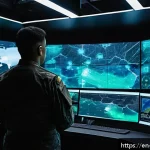
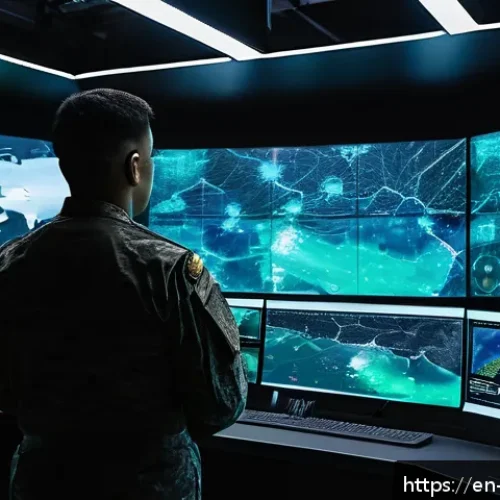
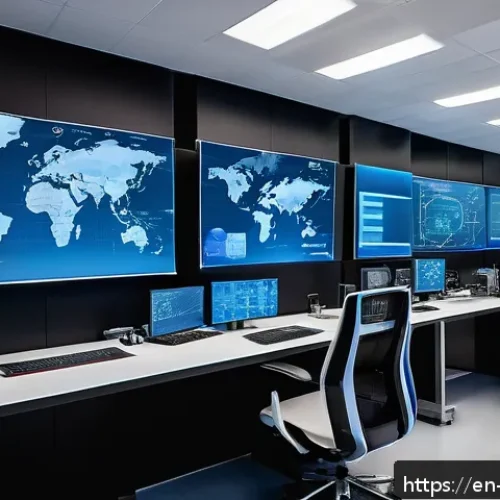
Detecting a submarine is only half the battle; interpreting the flood of data is equally crucial. Modern ASW platforms employ advanced data fusion centers that combine inputs from sonar, MAD, radar, and satellite intelligence into cohesive tactical pictures.
I recall participating in exercises where the command center’s real-time visualization helped operators quickly differentiate between false contacts and real threats.
Machine learning models are now embedded to predict submarine movements based on historical patterns, drastically improving tracking persistence and engagement decisions.
Coordinated Multi-Domain Operations in Submarine Hunting
Surface Vessels and Their Role in the ASW Network
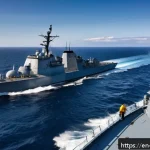
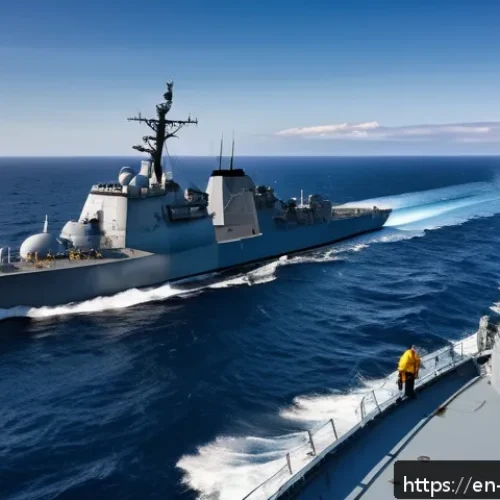
Surface ships remain indispensable in ASW, not just as standalone hunters but as nodes in a broader sensor network. Destroyers and frigates equipped with hull-mounted and towed-array sonars provide persistent surveillance in contested waters.
What struck me during a joint naval exercise was how these vessels maintain constant communication with aerial units and submarines, sharing detections and coordinating search patterns.
Their ability to deploy anti-submarine rockets (ASROC) and torpedoes means they can rapidly engage once a contact is confirmed, making them both hunters and defenders.
Airborne ASW Assets: Eyes and Ears Above the Waves
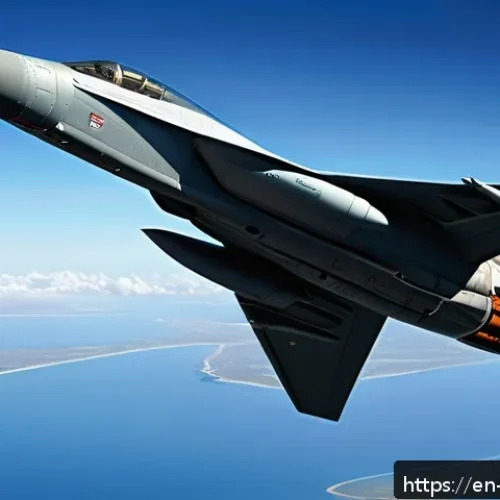
Maritime patrol aircraft and helicopters play a dynamic role in ASW operations. Helicopters, with dipping sonar and sonobuoys, can quickly localize and track submarines over a wide area.
I’ve observed how their agility allows them to close in on contacts detected by larger aircraft, honing in for a precise attack run. Fixed-wing patrol planes, meanwhile, cover vast ocean expanses, deploying sonobuoys in patterns that create a virtual sensor grid.
Their endurance and speed are critical for rapid response, especially in blue-water scenarios far from friendly bases.
Submarines as ASW Platforms
It might sound ironic, but submarines themselves are among the best hunters of their kind. Attack submarines equipped with low-frequency sonar can stealthily track enemy subs from great distances.
I’ve heard accounts from veterans describing cat-and-mouse games beneath the ocean surface, where silence and patience are weapons. Their ability to position covertly near chokepoints or strategic areas allows them to act as sentinels, feeding intelligence back to the fleet while remaining hidden.
Innovations in Sonobuoy Deployment and Interpretation
Types and Functions of Sonobuoys
Sonobuoys have evolved into an indispensable tool for ASW, serving as remote ears scattered over the ocean surface. They come in active and passive varieties, with active sonobuoys emitting sound pulses and passive ones simply listening.
I’ve found that modern sonobuoys now feature improved battery life and enhanced communication capabilities, allowing for longer and more reliable operations.
Some can even relay data via satellite links, extending the reach of patrol aircraft and surface vessels.
Pattern Deployment Strategies
The way sonobuoys are deployed can make or break a search mission. Rather than random scattering, patterns such as barrier lines, circular arrays, or line abreast formations are used depending on tactical needs.
I once witnessed a scenario where a patrol aircraft deployed a line of passive sonobuoys across a suspected transit route, effectively creating an acoustic tripwire.
This strategy allowed the team to detect a stealthy submarine attempting to slip through undetected, showcasing how deployment tactics amplify sensor effectiveness.
Interpreting Sonobuoy Data in Complex Environments
The ocean is a noisy place, full of marine life, shipping traffic, and natural phenomena that complicate acoustic readings. Sonobuoy operators must be skilled at differentiating between these background sounds and genuine submarine signatures.
From my experience, advanced software tools now assist analysts by highlighting anomalous patterns and filtering out false positives. However, human judgment remains critical, especially when dealing with ambiguous contacts that require real-time tactical decisions.
Emerging Threats and Adaptive Countermeasures
Quiet Submarine Designs and Acoustic Stealth
Modern submarines have significantly improved their stealth capabilities, making detection a formidable challenge. Innovations in hull coatings, propeller designs, and machinery isolation drastically reduce noise emissions.
I recall a briefing where engineers explained how new anechoic tiles absorb sonar waves rather than reflecting them, effectively cloaking the sub. This arms race forces ASW forces to constantly innovate, pushing for more sensitive sensors and smarter tactics.
Counter-Detection Tactics by Submarines
Submarines don’t just hide; they actively try to confuse and evade detection. Deploying decoys, jamming sonar signals, and exploiting complex underwater terrain are common tactics.

During a simulated engagement, I observed how a submarine deployed acoustic decoys that mimicked its signature, forcing the ASW team to sift through multiple false contacts.
Such evasive maneuvers require ASW forces to maintain flexibility and skepticism, often relying on multiple sensor types to verify targets.
Integration of Artificial Intelligence in Counter-Countermeasures
AI is becoming a cornerstone in both detection and counter-detection strategies. Machine learning algorithms analyze vast datasets to recognize subtle patterns that human operators might miss.
In ASW, AI can predict likely submarine routes, optimize sensor deployment, and even automate initial contact classification. My interactions with AI-enhanced systems suggest they significantly reduce operator fatigue and improve decision speed, although human oversight remains essential to handle edge cases and unexpected behaviors.
Table: Key ASW Technologies and Their Operational Roles
| Technology | Primary Function | Platform | Advantages | Limitations |
|---|---|---|---|---|
| Variable-Depth Sonar | Detect submarines at varying depths | Surface ships, submarines | Adapts to sound layer variations, increases detection range | Complex operation, vulnerable to countermeasures |
| Magnetic Anomaly Detector (MAD) | Detects metal hulls via magnetic field changes | Maritime patrol aircraft, helicopters | Highly effective near surface, complements sonar | Limited range, ineffective at depth |
| Sonobuoys | Acoustic sensing, active/passive listening | Aircraft, ships | Deployable in patterns, extends sensor coverage | Limited battery life, surface deployment only |
| Low-Frequency Active Sonar | Long-range detection using low-frequency pings | Submarines, surface ships | Penetrates noise, detects stealthy subs | Potential environmental concerns, detectable by enemy |
| AI-Driven Data Fusion | Integrates multisensor data for real-time analysis | Command centers, ASW platforms | Improves accuracy, reduces operator workload | Requires robust data inputs, risk of false positives |
Training and Simulation: Preparing Crews for Submarine Threats
Realistic War Games and Scenario-Based Drills
The complexity of ASW demands that crews be exceptionally well-trained, and realistic simulation exercises are crucial. I’ve participated in multi-day war games where entire fleets coordinate ASW operations against simulated enemy subs.
These drills include everything from sensor deployment timing to weapons delivery, pushing crews to make split-second decisions under pressure. The feedback loop from these exercises helps refine tactics and identify weaknesses before real engagements.
Virtual and Augmented Reality for Skill Enhancement
Emerging technologies like VR and AR are transforming ASW training by immersing operators in lifelike underwater environments. I had the chance to try VR simulators that replicate sonar consoles and acoustic environments, allowing trainees to practice contact identification and tracking without the cost and risk of live exercises.
This hands-on virtual experience builds muscle memory and sharpens situational awareness, critical for high-stress ASW missions.
Cross-Platform Coordination Training
Effective ASW is rarely a single-platform effort; it requires seamless coordination among ships, aircraft, and submarines. Training programs now emphasize joint operations where communication protocols and data sharing are practiced rigorously.
From my observations, these exercises foster trust and interoperability, ensuring that when a real threat appears, all units can operate as a cohesive, synchronized force rather than isolated players.
Future Horizons: Next-Gen ASW Technologies on the Horizon
Unmanned Underwater Vehicles (UUVs) Expanding the Battlefield
Unmanned systems are poised to revolutionize ASW by extending reach and persistence without risking human crews. I’ve followed the development of UUVs capable of autonomous search patterns and real-time data relay back to command centers.
Their ability to operate quietly and for extended periods makes them ideal for persistent surveillance in denied areas, filling gaps where manned platforms cannot linger.
Quantum Sensors and Enhanced Detection Potential
Quantum sensing technology promises to detect submarines with unprecedented sensitivity by measuring subtle changes in gravitational or magnetic fields.
While still in experimental stages, I’ve read about prototypes capable of detecting underwater vehicles beyond the range of traditional sensors. If successfully integrated, these could drastically shift the ASW balance, giving navies a new edge in stealth detection.
Network-Centric Warfare and ASW Integration
The future ASW battlefield will be a fully networked environment where all sensors, platforms, and command nodes share information instantaneously. This network-centric approach enhances situational awareness and enables rapid, coordinated responses.
From what I’ve gathered, ongoing projects focus on secure, high-bandwidth communications and AI-driven decision support systems that will make ASW operations more agile and effective than ever before.
Conclusion
Anti-submarine warfare continues to evolve rapidly with cutting-edge detection technologies and coordinated multi-domain operations. Through integrating advanced sensors, AI-driven data analysis, and innovative training methods, naval forces are better equipped to counter stealthy submarine threats. As new technologies emerge, the future of ASW promises even greater precision and effectiveness in protecting maritime security.
Useful Information to Know
1. Modern sonar systems use advanced algorithms to filter ocean noise and enhance submarine detection in challenging environments.
2. Magnetic Anomaly Detectors complement sonar by detecting subtle magnetic changes caused by submarines near the surface.
3. Sonobuoy deployment patterns are critical for creating effective acoustic barriers and improving detection coverage.
4. AI integration in ASW platforms helps reduce operator fatigue and speeds up decision-making processes.
5. Unmanned Underwater Vehicles are expanding ASW capabilities by enabling persistent and risk-free underwater surveillance.
Key Takeaways
Effective anti-submarine warfare relies on a blend of advanced sensor technologies and coordinated operations across surface ships, aircraft, and submarines. The growing role of AI and unmanned systems enhances detection accuracy and operational efficiency. Continuous training using realistic simulations ensures crews remain prepared for evolving submarine threats, while emerging technologies like quantum sensors and network-centric warfare are set to redefine the ASW landscape in the near future.
Frequently Asked Questions (FAQ) 📖
Q: What are the most common technologies used in modern anti-submarine warfare?
A: Modern ASW relies heavily on a combination of advanced sonar systems, including passive and active sonar, to detect and track submarines underwater. Additionally, magnetic anomaly detectors (MAD), underwater drones, and satellite surveillance complement these efforts.
For instance, passive sonar listens for submarine noises without revealing the searcher’s location, which is crucial for stealth. My experience with naval tech forums highlights how integrating these tools creates a layered defense, making it much harder for stealthy submarines to evade detection.
Q: How do navies counter increasingly stealthy submarines?
A: Navies adapt by enhancing sensor sensitivity and deploying multi-platform approaches. This means combining surface ships, submarines, aircraft, and unmanned vehicles to create overlapping detection zones.
From what I’ve read and seen in exercises, tactics like “pattern search” and “barrier patrols” help cover vast ocean areas efficiently. Plus, real-time data sharing between units accelerates response times, making it tougher for stealth subs to slip through.
It’s a game of constant innovation and teamwork.
Q: Why is anti-submarine warfare critical for maritime security today?
A: Submarines represent a hidden yet potent threat capable of disrupting shipping lanes, gathering intelligence, or launching surprise attacks. ASW ensures these underwater threats don’t go unnoticed, protecting both commercial interests and national security.
From personal conversations with defense analysts, the growing sophistication of submarines—like quieter engines and improved battery life—means that without effective ASW, naval forces risk losing their strategic edge beneath the waves.
So, mastering ASW is essential to maintain control over crucial sea routes and deter adversaries.