Hey there, future strategists and tech enthusiasts! You know, for a long time, when I thought about artillery, my mind went straight to those booming, powerful but perhaps a bit unwieldy giants of the battlefield.

But let me tell you, if you’re picturing the same, you’re missing out on a truly electrifying transformation! I’ve been diving deep into the world of modern military strategy, and it’s crystal clear that long-range artillery isn’t just evolving; it’s undergoing a full-blown revolution.
We’re talking about systems that are smarter, faster, and infinitely more precise than anything we’ve seen before, driven by cutting-edge advancements.
From the incredible synergy with AI and drone technology that’s making every shot count, to the relentless push for ranges that were once the stuff of science fiction, the game has fundamentally changed.
The challenges are immense, from logistics to the constant dance of counter-battery fire, but the innovations are truly breathtaking, reshaping how conflicts are fought and even deterred globally.
This isn’t just about bigger guns; it’s about a networked battlefield where precision, speed, and intelligence reign supreme. Trust me, you’ll want to stick around because below, we’re going to pull back the curtain and explore exactly how these strategies are being forged right now, and what the future holds for the “king of battle.”
Hey everyone,
The Digital Brains Behind the Boom: AI and Machine Learning in Artillery
It used to be that artillery targeting felt almost like an art form, relying heavily on experienced human observers, complex manual calculations, and a hefty dose of intuition. But boy, have times changed! I’ve seen firsthand how Artificial Intelligence and machine learning are fundamentally transforming how artillery operates, ushering in an era of digitized, precision-based, and highly autonomous warfare. AI algorithms are now processing vast amounts of real-time data from various sensors, crunching numbers on weather conditions, terrain, and even moving targets with a speed and accuracy that no human could ever match. This isn’t just about making things a little better; it’s a complete paradigm shift, enabling artillery units to react dynamically to battlefield changes, altering targeting strategies on the fly, and significantly reducing the “sensor-to-shooter” time. The goal, as I understand it, is to virtually eliminate human error from ballistic calculations and optimize fire control to such an extent that every single round becomes a precision strike, hitting exactly where it needs to go, often with the first shot. This leap in capability means less wasted ammunition and, crucially, a reduced risk of collateral damage, which is something I think we can all agree is a massive step forward for modern warfare. Imagine the confidence a commander must feel knowing their fire support is not just powerful, but also incredibly smart and surgical.
Predictive Analytics for Pinpoint Strikes
- AI-driven systems now autonomously assess environmental conditions, track moving targets, and calculate optimal firing solutions in real-time, greatly enhancing accuracy and response times.
- Machine learning models are constantly refining their understanding of ballistics and environmental factors, adapting and improving precision with every round fired, making future engagements even more effective.
Autonomous Targeting and Fire Control Systems
- Artillery is rapidly evolving into a smart warfare component, integrating AI for increased battlefield efficiency and enhanced survivability.
- AI-powered artillery shells, like the Cannon-Delivered Area Effects Munition (C-DAEM), are being developed to locate and target moving vehicles after being fired, replacing older, less precise munitions.
Eyes in the Sky: How Drones Are Redefining Targeting
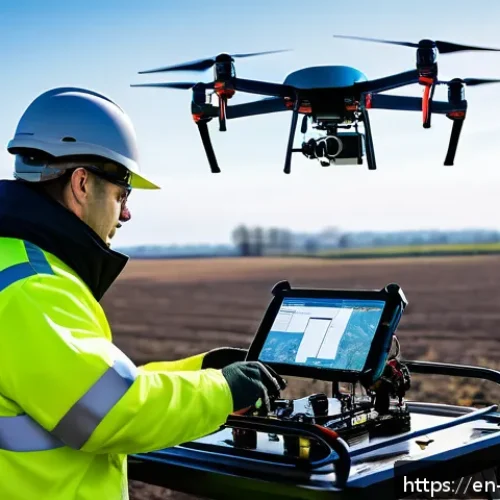
Honestly, when I first started tracking these developments, the idea of drones working hand-in-hand with artillery felt like something out of a futuristic movie. But here we are, and it’s absolutely brilliant. Drones aren’t just for reconnaissance anymore; they’ve become the indispensable “eyes in the sky” for long-range artillery, revolutionizing target acquisition and battle damage assessment. They provide real-time battlefield intelligence from elevated vantage points, whether it’s identifying enemy movements, artillery positions, armored vehicles, or even camouflaged threats. This immediate feedback loop means that artillery units can make rapid adjustments to firing solutions, dramatically increasing the likelihood of first-round hits and making prolonged bombardments a thing of the past. I’ve heard stories from various conflicts where drones, particularly FPV (First Person View) types, are guiding artillery strikes with incredible precision, sometimes costing significantly less than a single traditional artillery shell while achieving similar or even better effects. It’s truly a game-changer, transforming the battlefield into a more transparent and responsive environment for artillery operators.
Real-time Reconnaissance and Battle Damage Assessment
- Drones provide crucial real-time intelligence, relaying accurate coordinates and situational information to artillery units, significantly reducing the time from target detection to engagement.
- The French Army, for instance, has integrated SMDR drones with its CAESAR 155mm howitzers to gain real-time battlefield intelligence for precise target acquisition and rapid strikes, minimizing human risk.
Loitering Munitions and the Hunter-Killer Concept
- The integration of FPV drones with autonomous targeting systems allows operators to detect and lock onto targets, with the drone then automatically striking without further human intervention.
- Loitering munitions offer a more precise and often cheaper alternative to traditional guided artillery and drones, capable of circling over a target area if the target isn’t immediately visible.
Pushing the Boundaries of Range and Precision
Back in the day, “long-range” artillery meant something entirely different. Now, the advancements in munitions and propulsion are just mind-boggling. We’re talking about ranges that were once the exclusive domain of missiles, but now tube artillery and rocket systems are pushing those boundaries further than ever before. Rocket assistance, base bleed units, and even ramjet propulsion are becoming standard technologies, significantly extending the reach of artillery shells. I’ve followed developments where 155mm shells are aiming for targets over 90 miles (150 kilometers) away! But it’s not just about distance; it’s also about hitting what you aim at, precisely. Guided munitions, like the M982 Excalibur, have truly revolutionized this space, ensuring that a single shot can achieve the desired effect. The era of “one shot, one kill” for artillery is becoming a reality, minimizing wasted rounds and collateral damage, which is a massive logistical and ethical improvement. This focus on precision means that forces can engage high-value targets with remarkable accuracy, fundamentally altering tactical and strategic planning.
Extended Range Artillery and Rocket Systems
- Programs like the U.S. Army’s Extended Range Artillery Munitions Suite (ERAMS) are developing ramjet-powered 155mm shells to achieve ranges of 150 kilometers or more.
- New propellants and barrel technologies allow howitzers to achieve ranges double or even triple that of older systems, with rocket-assisted projectiles reaching over 40 kilometers.
Guided Munitions: The Era of “One Shot, One Kill”
- Precision-guided munitions (PGMs) integrate advanced guidance systems like GPS, laser guidance, or infrared sensors to achieve high-accuracy strikes with minimal error.
- The M982 Excalibur, a 155mm precision-guided artillery round, provides accurate, first-round fire-for-effect capability, even in urban settings with low collateral damage.
Overcoming the Logistical Labyrinth of Modern Artillery
This is where the rubber meets the road, folks. All these incredible technological advancements are fantastic, but they mean nothing if you can’t keep the guns fed and operational. Logistics has always been the unsung hero of warfare, and in the age of advanced, long-range artillery, it’s more critical – and complex – than ever. These new munitions are often heavier, more sophisticated, and require careful handling. I’ve talked to experts who emphasize that maintaining a steady supply chain in a contested environment, especially with the threat of long-range interdiction, is a monumental task. Automated ammunition handling systems are becoming essential to speed up loading times and reduce human exposure to danger. Furthermore, predictive maintenance, powered by AI, is helping to keep these complex systems operational by anticipating failures before they happen. It’s not just about moving shells; it’s about moving the right shells, to the right place, at the right time, all while under constant threat. Trust me, the sheer scale of planning and execution required to support modern artillery is something that truly puts me in awe.
Automated Ammunition Handling and Supply Chains
- Automated loading systems are being integrated into self-propelled howitzers to increase the rate of fire and reduce crew size, streamlining the ammunition handling process.
- AI logistics platforms analyze real-time battlefield data to prioritize resupply missions, select the safest routes, and forecast future needs, ensuring units remain combat-effective.
Maintenance and Readiness in a High-Tempo Environment
- Predictive maintenance, often using AI, helps identify potential equipment failures before they occur, reducing unexpected downtime for complex artillery systems.
- The increasing combat weight and sophistication of modern artillery systems demand robust maintenance support, sometimes necessitating greater reliance on contractor support in forward areas.
The Cat-and-Mouse Game: Counter-Battery Fire and Survivability
If you’ve got powerful artillery, you can bet your bottom dollar the enemy is going to try and take it out. That’s why the counter-battery game has evolved into this incredibly intense, high-stakes cat-and-mouse chase. It’s not just about having the longest reach; it’s about being able to shoot and then disappear before the enemy can even figure out where you fired from. “Shoot-and-scoot” tactics, where self-propelled artillery fires a salvo and immediately relocates, are absolutely vital. Modern counter-battery radars are so advanced they can detect incoming shells, calculate their point of origin almost instantly, and relay that data for retaliatory fire. I’ve heard that good counter-battery teams can get rounds in the air towards the enemy position before the initial barrage even lands! So, artillery systems are constantly being designed with reduced signatures, enhanced mobility, and even active protection systems to defend against incoming threats. It’s a continuous technological arms race, and survivability is just as important as lethality in this new era.
Shoot-and-Scoot Tactics and Signature Management
- Modern self-propelled howitzers are designed for rapid deployment, firing, and immediate relocation to avoid detection by enemy counter-battery radars.
- Computer technology now aids in technical fire control, allowing for greater dispersion of guns while maintaining coordinated fires, making it harder for enemy sensors to pinpoint positions.
Active Protection Systems and Defensive Measures
- Counter-RAM (Rocket, Artillery, and Mortar) systems track incoming projectiles, attempting to intercept and destroy them or provide early warning to targeted areas.
- Efforts are ongoing to develop artillery systems with reduced radar, visual, and thermal signatures, making them harder to detect and target on a constantly monitored battlefield.
| Feature | Traditional Long-Range Artillery | Modern Long-Range Artillery |
|---|---|---|
| Targeting | Manual observation, pre-calculated firing tables, slower acquisition | AI-driven, drone-assisted, real-time data fusion, rapid acquisition |
| Precision | Area saturation, less accurate at extreme ranges, higher collateral risk | Pinpoint accuracy, guided munitions, reduced collateral damage |
| Range | Limited by propellant and barrel technology, often shorter effective ranges | Extended range projectiles (ERPs), ramjet technology, rockets, unprecedented distances |
| Survivability | Static positions, vulnerable to counter-battery fire, slower relocation | Shoot-and-scoot tactics, networked mobility, signature reduction, active protection |
| Integration | Standalone assets, limited real-time communication | Seamlessly integrated into battle networks, C4ISR, sensor-to-shooter links |
From Deterrence to Dominance: The Strategic Impact
The transformation of long-range artillery isn’t just about tactical advantages on the ground; it’s fundamentally reshaping global strategic landscapes. When a nation can reliably strike deep into enemy territory with pinpoint precision, it changes everything. This capability allows for strategic interdiction, holding high-value targets like command centers, airfields, or even naval assets at risk, far from the front lines. I’ve been tracking how the proliferation of these long-range precision fires is influencing deterrence strategies, making potential adversaries think twice before engaging. It’s about denying the enemy freedom of movement and action across multiple domains—land, air, and cyber—by leveraging the sheer destructive power and accuracy of modern artillery. This isn’t the attrition warfare of old; it’s about achieving decisive effects with fewer, smarter shots, which in turn influences the broader power dynamics between nations. The “king of battle” is asserting its dominance in a whole new, highly sophisticated way, and the implications for global security are immense.
Shaping the Modern Battlefield

- Long-range precision fires are crucial for supporting joint maneuver, intelligence, surveillance, and reconnaissance (ISR) fusion, and strategic deterrence in contested environments.
- The ability to strike targets at strategic depth with precision fundamentally alters how militaries plan and execute offensive and defensive operations.
The Evolving Role in Global Power Dynamics
- Long-range precision fires provide flexible options for dynamic force employment, making a nation’s forces strategically predictable for allies but operationally unpredictable for adversaries.
- The capability to penetrate layers of enemy anti-access/area-denial (A2/AD) efforts significantly enhances a nation’s ability to project power and maintain influence.
The Human Element in an AI-Enhanced Future
As much as we talk about AI and autonomy, it’s critical to remember that the human element isn’t going anywhere. In fact, its role is evolving, becoming even more focused on critical decision-making and ethical oversight. I’ve seen discussions about how AI can process data and suggest optimal solutions at machine speed, but the final judgment for lethal force must, and I believe always will, rest with a human. It’s about augmented intelligence, not replacement. Soldiers will still be training, but their focus will shift to understanding these complex systems, validating AI-suggested targets, and navigating the moral dilemmas that advanced technology can sometimes present. This means that future artillery crews will be highly skilled technicians and strategists, collaborating seamlessly with intelligent machines. The ethical implications of autonomous weapons are a huge part of the conversation, ensuring that as technology advances, our human values and accountability remain firmly in control. It’s a fascinating balance, isn’t it? The goal isn’t to remove humans from the loop, but to empower them with tools that make them infinitely more effective and safe.
The Indispensable Role of Human Judgment
- While AI enhances accuracy and decision acceleration, human commanders must remain the final arbiters of lethal force, preserving the principle of human-on-the-loop decision-making.
- AI should augment, not replace, critical targeting functions such as rules of engagement validation, proportionality assessments, and determinations of military necessity.
Training the Next Generation of Artillery Warriors
- Future training will emphasize the integration of technical expertise with strategic thinking, preparing soldiers to operate and oversee AI-driven artillery systems effectively.
- The collaboration between technical experts and strategists is crucial for shaping effective, ethical, and sustainable military policies and practices in an AI-driven landscape.
Wrapping Things Up
Whew! What a journey we’ve taken through the incredible evolution of long-range artillery. It’s truly mind-blowing to see how the “King of Battle” is not just adapting but aggressively reinventing itself for the modern age. From the surgical precision offered by AI-driven targeting to the extended reach enabled by advanced munitions, and the indispensable eyes of drones overhead, we’re witnessing a complete revolution. What I’ve really taken away from diving into this topic is that this isn’t just about bigger bangs; it’s about smarter, faster, and more integrated warfare. The ethical considerations and the enduring human element in decision-making remain paramount, reminding us that even with all this cutting-edge tech, it’s still about the people. This transformation is shaping global security in profound ways, and honestly, it’s a dynamic space that continues to surprise and challenge our understanding of future conflicts. Keep an eye on this space, because I have a feeling the best, or perhaps the most revolutionary, is yet to come!
Useful Information You Might Not Know!
1. The U.S. Army is actively working on developing Extended Range Artillery Munitions (ERAMs), including ramjet-powered 155mm shells, with an ambitious goal of reaching targets over 90 miles (150 kilometers) away! This kind of range really redefines what “long-range” means.
2. The “shoot-and-scoot” tactic isn’t just a cool phrase; it’s a vital survivability strategy for modern artillery. Self-propelled howitzers fire their rounds and then immediately relocate to avoid detection by enemy counter-battery fire, making them incredibly difficult to pinpoint.
3. Thinking about a career in this cutting-edge field? Artillery and missile crew members in the military are now trained on high-tech cannon artillery weapon systems, including loading and firing howitzers, setting fuses on laser-guided projectiles, and operating sophisticated communication and data connectivity equipment. It’s a far cry from just pulling a lanyard!
4. The ethical implications of AI in warfare are a huge ongoing discussion among military strategists, ethicists, and even tech developers. There’s a strong consensus on maintaining “human responsibility” in deploying weapon systems and ensuring human oversight for lethal force decisions, even with highly autonomous systems.
5. Modern artillery systems are increasingly integrated into network-centric warfare strategies. This means they’re not just standalone assets; they’re part of a larger, interconnected battlefield, sharing real-time data to achieve tactical and strategic objectives with rapid, accurate, and sustained fire.
Key Takeaways
The world of long-range artillery is experiencing an unprecedented technological boom, driven by the powerful integration of artificial intelligence, advanced drone capabilities, and munitions designed for extreme range and precision. This isn’t just about incremental improvements; it’s a foundational shift towards more intelligent, responsive, and decisive firepower on the battlefield. The challenges of logistics and the constant threat of counter-battery fire are being met with innovative solutions, including automation and enhanced mobility, highlighting a continuous arms race in military technology. Strategically, these advancements are reshaping deterrence and global power dynamics, allowing nations to project influence and hold high-value targets at risk like never before. Critically, amidst all this technological marvel, the indispensable role of human judgment and ethical considerations remains at the forefront, ensuring that as our capabilities grow, our commitment to responsible and accountable warfare stays strong. The future of artillery promises to be a complex, high-tech dance between human ingenuity and machine efficiency.
Frequently Asked Questions (FAQ) 📖
Q: How exactly are
A: I and drone technology fundamentally changing the game for long-range artillery, making it so much more precise and effective? A1: Oh, this is where it gets truly fascinating!
You know, for a long time, artillery was a bit like playing darts in the dark – powerful, but often more about saturation than surgical strikes. But let me tell you, when I first dug into how AI and drones are pairing up with modern artillery, it absolutely blew my mind.
It’s not just an improvement; it’s a complete paradigm shift. Drones, especially those smaller, agile tactical ones, are the eyes and ears in the sky that artillery operators never had before.
They’re not just spotting targets; they’re providing real-time, high-definition data on everything from enemy positions to weather conditions and even potential counter-battery threats.
Think about it: a drone can loiter over an area, giving constant updates. Then, you bring in AI. AI algorithms are crunching all that drone data, along with topographical maps and ballistic information, in milliseconds.
They’re predicting target movement, calculating the optimal trajectory with unheard-of precision, and even suggesting the best type of munition for the job.
I remember reading about a simulation where an AI-powered system reduced the time from target identification to first shot by over 70%! This means fewer shells wasted, less collateral damage, and frankly, a far more decisive impact on the battlefield.
It’s like upgrading from a manual calculator to a supercomputer – the difference is just staggering.
Q: What are some of the most significant challenges militaries are facing when integrating these new, advanced long-range artillery systems into their operations?
A: That’s a brilliant question, and honestly, it’s not all sunshine and roses despite the incredible tech. From what I’ve gathered, and talking to folks who work on these systems, one of the biggest headaches is simply the sheer complexity.
These aren’t your grandpa’s howitzers! We’re talking about highly sophisticated networked systems, and integrating them means a massive overhaul of training, logistics, and even the very mindset of how operations are planned.
You need soldiers who aren’t just good at firing a gun, but who are tech-savvy enough to manage complex software, understand data feeds, and troubleshoot advanced electronics.
Then there’s the logistical nightmare. These advanced munitions, while incredibly precise, are often more expensive and require specialized handling and storage.
Imagine trying to keep track of and transport thousands of smart shells across vast, often hostile, territories. It’s a huge undertaking! And let’s not forget about the “electronic warfare dance.” If your artillery relies heavily on GPS and drone feeds, it becomes vulnerable to jamming and cyberattacks.
Militaries are in a constant race to develop countermeasures, but it’s a never-ending cat-and-mouse game. It truly takes a holistic approach to make these systems effective, and that’s a tough nut to crack for even the most well-resourced forces.
Q: Beyond just range, what are the truly “revolutionary” aspects of modern long-range artillery that we should be paying attention to right now?
A: Ah, this is where the excitement really builds for me! While extended range is certainly impressive – I mean, hitting targets hundreds of kilometers away is mind-boggling – it’s really the how and what that truly defines this revolution.
I’d say the number one game-changer is precision on a whole new level. We’re talking about hitting a specific window on a building from miles away, not just a general grid square.
This drastically reduces civilian casualties and allows for incredibly focused strikes, which wasn’t really possible before. Secondly, it’s the speed of the entire kill chain.
From a drone spotting a target to the artillery round impacting, the time has shrunk dramatically. This gives adversaries far less time to react, relocate, or establish defensive positions.
It’s a tactical advantage that’s hard to overstate. And finally, something that often gets overlooked but is profoundly revolutionary, is multi-domain integration.
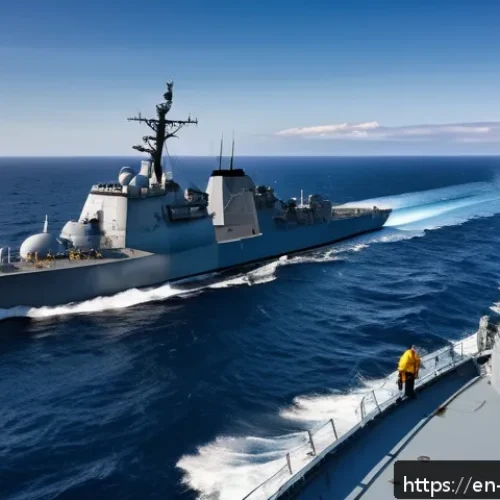
Modern artillery isn’t just a ground weapon anymore. It’s becoming seamlessly integrated with air, sea, and even cyber assets. Imagine a naval vessel sharing target data with ground artillery, or a stealth jet providing targeting coordinates for a long-range cannon.
It’s creating a truly unified battlefield, where every asset enhances every other. This interconnectedness, driven by advanced communications and AI, is what makes me believe we’re witnessing not just an evolution, but a complete transformation of the “king of battle” as we know it.